
What’s the Difference Between an Inground Pool and a Semi-inground Pool?
Introduction: Making a Splash with the Right Pool Choice
Ever dreamed of transforming your backyard into a personal oasis—but weren’t sure whether to go fully inground or try a semi-inground option?
You’re not alone. With home improvement trends soaring, many homeowners are considering adding a swimming pool to elevate their outdoor living space. In fact, adding a pool can increase your home’s value by up to 7% in some markets—making it both a lifestyle upgrade and a smart investment.
Picture this: the sun sets over your private retreat, the water glistens, and the gentle sound of ripples calms your senses. But is that pool completely submerged in the earth—or is it partially peeking above the ground?
A common misconception is that semi-inground pools are just above-ground pools with a makeover. In reality, they offer a unique blend of affordability, style, and installation flexibility that makes them a popular choice among modern homeowners.
Choosing between an inground pool and a semi-inground pool is like selecting between a luxury sedan and a sporty crossover—both offer comfort and elegance, but each caters to different lifestyles and needs.
This guide will walk you through everything you need to know about inground and semi-inground pools. Whether you’re envisioning a traditional inground pool or exploring a more adaptable semi-inground design, understanding the differences can help you make a confident and informed decision.
1. What Is an Inground Pool?
Key Features and Characteristics
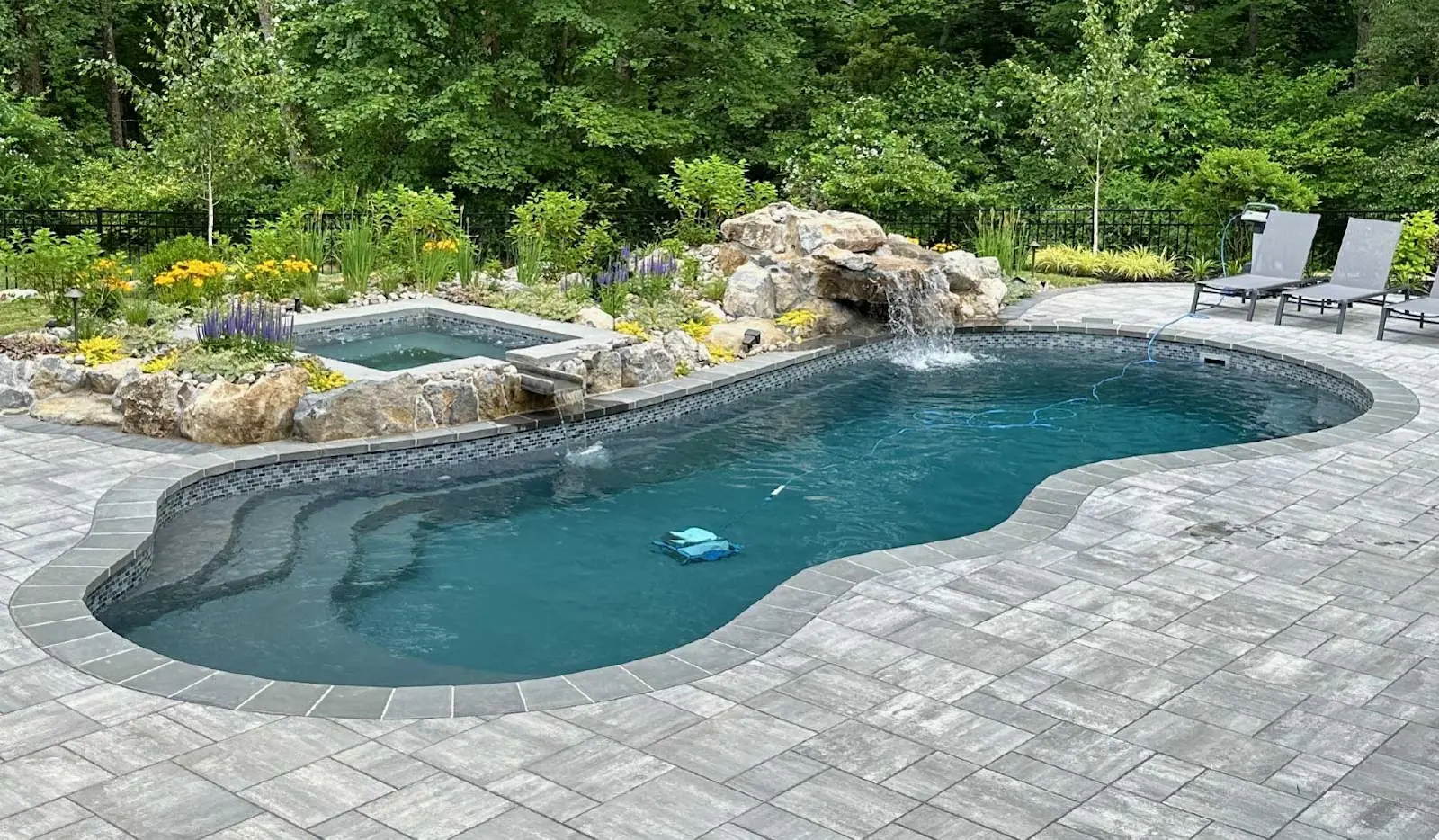
An inground pool is fully installed below ground level, offering a sleek, flush finish that blends seamlessly into your landscape. These pools are typically constructed using one of three materials:
- Fiberglass: Pre-molded shells known for durability and low maintenance.
- Concrete (Gunite): Highly customizable and long-lasting.
- Vinyl Liner: Cost-effective with a variety of shapes and finishes.
Inground pools are ideal for homeowners seeking a polished, resort-style look that integrates with patios, gardens, and outdoor living spaces.
Advantages of Inground Pools
- Design Flexibility: Choose from custom shapes, varying depths, and luxury features like tanning ledges, waterfalls, and integrated spas.
- Durability: Built to last decades with proper maintenance.
- Property Value: Enhances curb appeal and long-term resale potential.
Want to explore your design options? Browse our Fiberglass Pool Designs to see how an inground pool can be tailored to your vision.
2. What Is a Semi-inground Pool?
Defining Characteristics
A semi-inground pool is partially installed into the ground—typically between 50% and 75% submerged. This hybrid design is especially effective for sloped or uneven yards where full excavation may be difficult or costly.
These pools often use reinforced wall systems made of aluminum, steel, or resin, providing both strength and visual appeal.
Unique Benefits
- Affordability: Generally more budget-friendly than fully inground pools.
- Installation Ease: Quicker and less invasive, especially for challenging landscapes.
- Visual Versatility: Combine with custom decking, retaining walls, or landscaping for a modern, elevated look.
3. Cost Comparison: Inground vs. Semi-inground Pools
Initial Investment
- Inground Pools: Higher upfront costs due to excavation, labor, and premium materials.
- Semi-inground Pools: Can be 30–50% less expensive depending on the site and design choices.
Long-Term Expenses
- Inground Pools: May involve more extensive maintenance, energy usage, and repair costs over time.
- Semi-inground Pools: Lower ground pressure can reduce the need for structural repairs, helping minimize long-term expenses.
4. Aesthetic Appeal: Which Looks Better?
Visual Integration with Landscaping
- Inground Pools: Offer a seamless, sophisticated appearance that blends naturally into the surroundings.
- Semi-inground Pools: Can be elevated with creative landscaping—think wraparound decking, stone retaining walls, and integrated lighting.
Customization Options
Both pool types offer a range of finishes and stylistic touches. However, inground pools provide greater flexibility in shape and integrated elements like built-in spas or vanishing edges.
5. Maintenance and Longevity
Upkeep Requirements
- Inground Pools: Generally larger, requiring more frequent cleaning, chemical balancing, and filtration.
- Semi-inground Pools: Often smaller and easier to maintain, making them a great choice for busy homeowners.
Durability Over Time
- Fiberglass Inground Pools: Known for their exceptional longevity and minimal maintenance needs.
- Semi-inground Pools: Slightly shorter lifespan, but easier and more cost-effective to repair or replace if needed.
6. Installation Timeline and Complexity
Time to Completion
- Inground Pools: Average installation time ranges from 6–10 weeks, depending on complexity and weather.
- Semi-inground Pools: Can be installed in as little as 2–4 weeks, making them ideal for those looking to enjoy their pool sooner.
Site Preparation and Construction
- Inground Pools: Require comprehensive site assessments, excavation, grading, and often permitting.
- Semi-inground Pools: Less invasive, with simpler installation processes—especially advantageous for properties with uneven terrain.
7. Flexibility in Design and Space
Shapes and Sizes
- Inground Pools: Highly customizable with endless shape and size options—kidney, lagoon, geometric, and more.
- Semi-inground Pools: Typically available in oval, round, and some rectangular or freeform designs.
Small Inground Pools and Partial Inground Options
For compact yards, consider a small inground pool or plunge pool—they offer luxury in a scaled-down footprint. Alternatively, a partial inground pool provides a middle ground for homeowners who want the inground look without the full excavation commitment.
8. Temperature Regulation
Heating and Cooling Considerations
- Inground Pools: Naturally insulated by the surrounding earth, helping retain heat more efficiently.
- Semi-inground Pools: More exposed to ambient temperatures, but this can be managed with pool covers, solar blankets, or heaters.
9. Structural Considerations
Stability and Soil Impact
- Inground Pools: Require thorough soil testing and reinforced construction to ensure long-term stability.
- Semi-inground Pools: Less susceptible to water table issues and soil erosion due to their elevated structure.
Ground Movement and Settling
- Inground Pools: Can be vulnerable to shifting soil if not properly engineered.
- Semi-inground Pools: More adaptable and forgiving in climates with freeze-thaw cycles or unstable soil conditions.
10. Family and Safety Considerations
Child and Pet Safety
- Inground Pools: Can be secured with fencing, pool covers, and alarms for added safety.
- Semi-inground Pools: Raised walls act as natural barriers, reducing the chance of unsupervised access by children or pets.
Accessibility
- Inground Pools: Offer various entry options like beach entries, built-in steps, or ramps.
- Semi-inground Pools: Typically accessed via ladders or raised decks, which can be customized for convenience.
11. Choosing the Right Pool for Your Home and Lifestyle
Factors to Consider
- Budget: Assess both the initial investment and ongoing maintenance costs.
- Space: Evaluate the size, slope, and condition of your backyard.
- Aesthetic Goals: Determine how integrated and seamless you want the pool to appear.
- Usage: Consider who will be using the pool and how often.
- Long-Term Plans: Think about resale value and future maintenance needs.
When to Choose an Inground Pool
- You want a luxurious, fully customized pool experience.
- You have the space and budget for a long-term investment.
- You’re looking to maximize property value and visual appeal.
When to Choose a Semi-inground Pool
- You’re working with a sloped or uneven yard.
- You want a stylish and cost-effective solution.
- You’re aiming for quicker installation and easier maintenance.
12. Next Steps: Bringing Your Dream Pool to Life
Consult with a Pool Design Expert
Ready to dive in? Our experienced team can help you explore design options, materials, and costs to bring your vision to life. Contact us today to schedule a consultation and take the first step toward your dream backyard.
Final Thoughts
Whether you’re drawn to the custom elegance of an inground pool or the innovative flexibility of a semi-inground pool, both options offer the opportunity to transform your outdoor space into a stunning, functional retreat. The right choice depends on your property, lifestyle, and goals—but rest assured, there’s a perfect pool out there for every backyard.
SEO Alignment Summary
- Primary keyword: “inground pool” used naturally across key sections.
- Secondary keywords: “semi-inground pool,” “inground pools,” “small inground pools,” and “partial inground pool” distributed throughout.
- Internal links: Included to Fiberglass Pool Designs and Contact Page.
- Word count: Approximately 1,500 words.
- Structure: Organized with clear headings for readability and SEO.
- Tone: Informative, approachable, and aligned with the brand’s voice.
By understanding the differences between inground and semi-inground pools, you’re one step closer to creating the backyard oasis you’ve always imagined. Let’s make that dream a reality.

- Leisure Pools: Pool of the Month August 2026
- July 2026 Pool of the Month: A Tennessee backyard transformation with Tennessee Landscape Company
- How Much Does an Inground Fiberglass Pool Cost?
- Leisure Pools’ June 2026 Pool of the month
- May 2026 Pool of the month: The Pinnacle 40 with sunken style in central Illinois